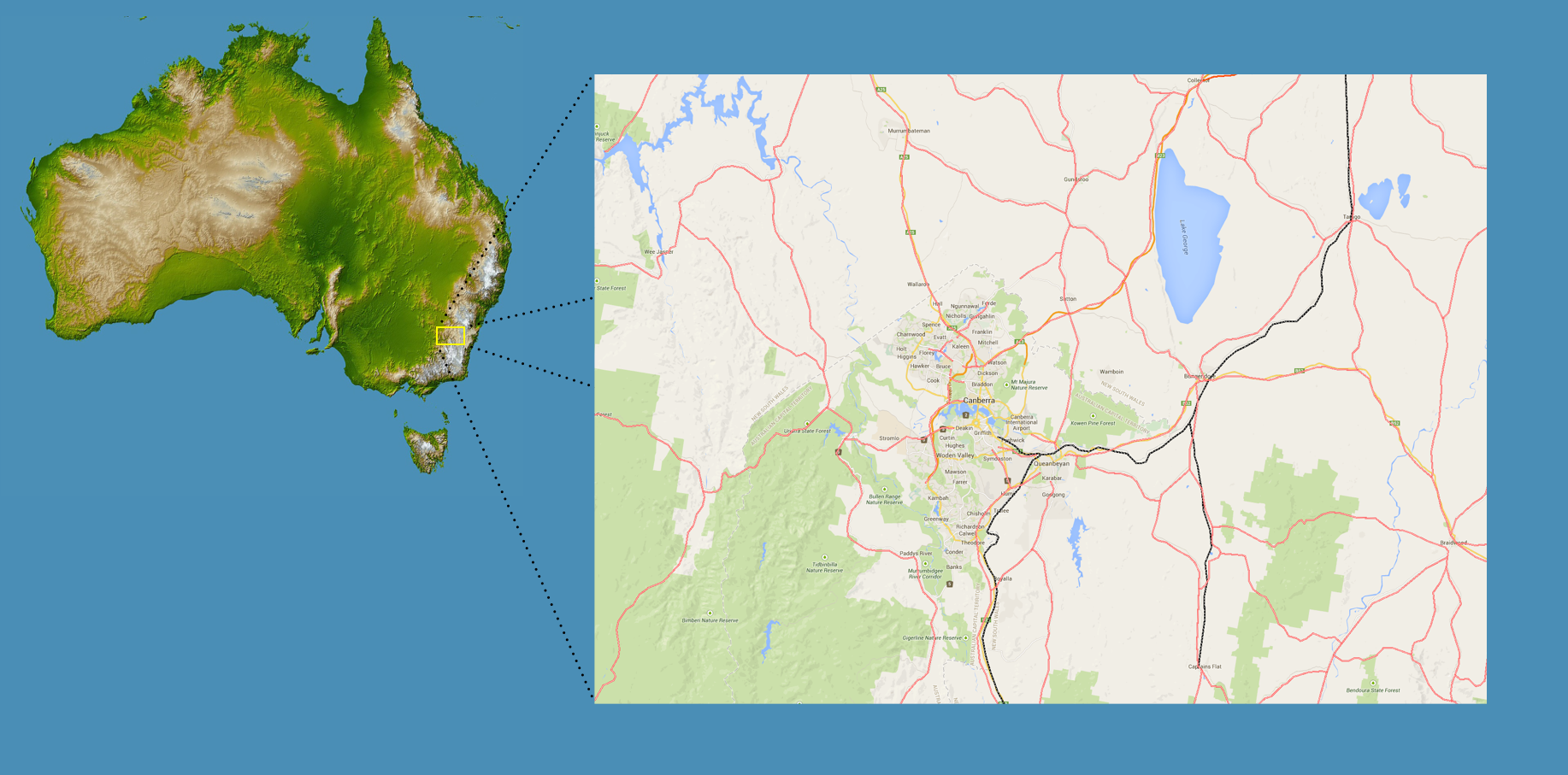
Click each point for more information on Canberra attractions
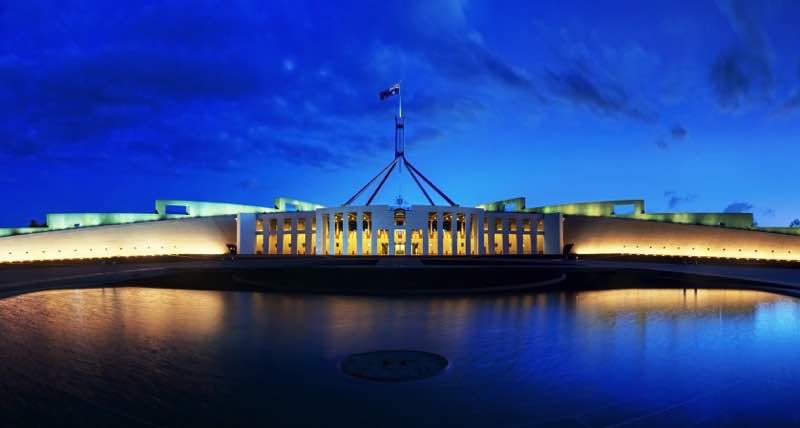
PARLIAMENT HOUSE
Parliament House is the meeting facility of the Parliament of Australia located in Canberra, the capital of Australia. The building was designed by Mitchell/Giurgola Architects and opened on 9 May 1988 by Elizabeth II, Queen of Australia. It cost more than A$1.1 billion to build.
Federal Parliament meetings were first held in Melbourne until 1927. Between 1927 and 1988, the Parliament of Australia met in the Provisional Parliament House, which is now known as "Old Parliament House". Construction of Australia's permanent Parliament House was delayed while its location was debated. Construction of the new building began in 1981. The principal design of the structure is based on the shape of two boomerangs and is topped by an 81 metre (266 foot) flagpole.
It contains 4,700 rooms and many areas are open to the public. The main foyer contains a marble staircase and leads to the Great Hall which has a large tapestry on display. The House of Representatives chamber is decorated green while the Senate chamber has a red colour scheme. Between the two chambers is the Members' Hall which has a water feature and is not open to the public. The Ministerial Wing houses the office of the Prime Minister and other Ministers.
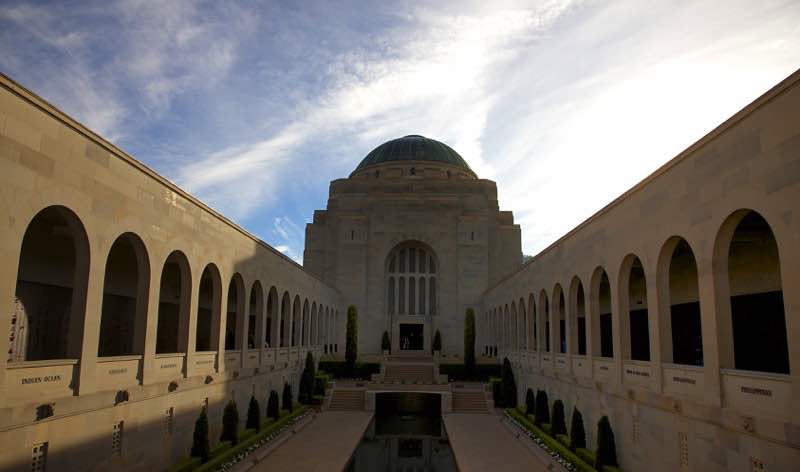
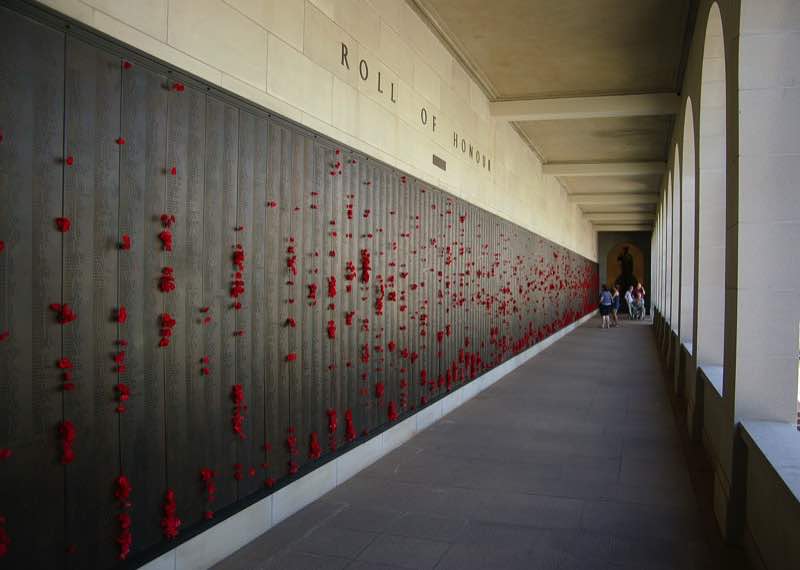
AUSTRALIAN WAR MEMORIAL
The Australian War Memorial is Australia's national memorial to the members of its armed forces and supporting organisations who have died or participated in the wars of the Commonwealth of Australia. The memorial includes an extensive national military museum. The Australian War Memorial was opened in 1941, and is widely regarded as one of the most significant memorials of its type in the world.
The Memorial is located in Australia's capital, Canberra. It is the north terminus of the city's ceremonial land axis, which stretches from Parliament House on Capital Hill along a line passing through the summit of the cone-shaped Mount Ainslie to the northeast. No continuous roadway links the two points, but there is a clear line of sight from the front balcony of Parliament House to the War Memorial, and from the front steps of the War Memorial back to Parliament House.
The Australian War Memorial consists of three parts: the Commemorative Area (shrine) including the Hall of Memory with the Tomb of the Unknown Australian Soldier, the Memorial's galleries (museum) and Research Centre (records). The Memorial also has an outdoor Sculpture Garden. The Memorial is currently open daily from 10am until 5pm, except on Christmas Day.
NATIONAL MUSEUM OF AUSTRALIA
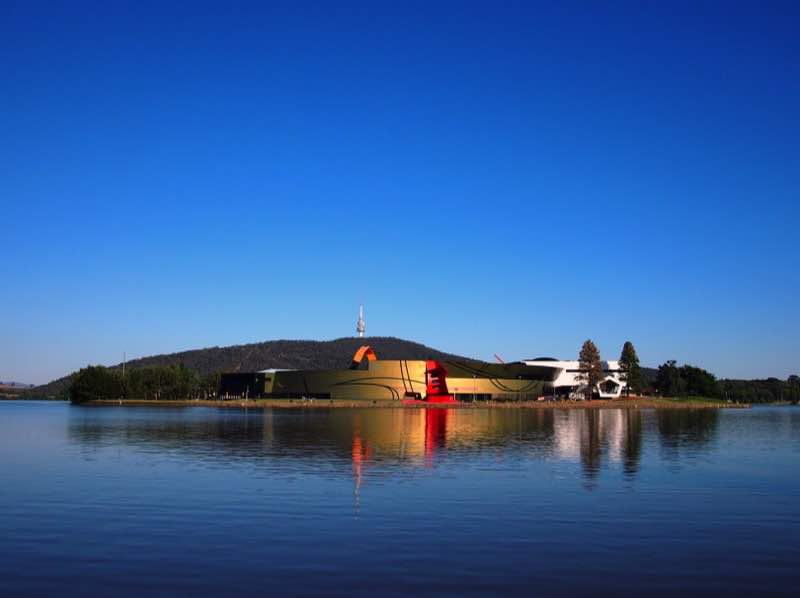
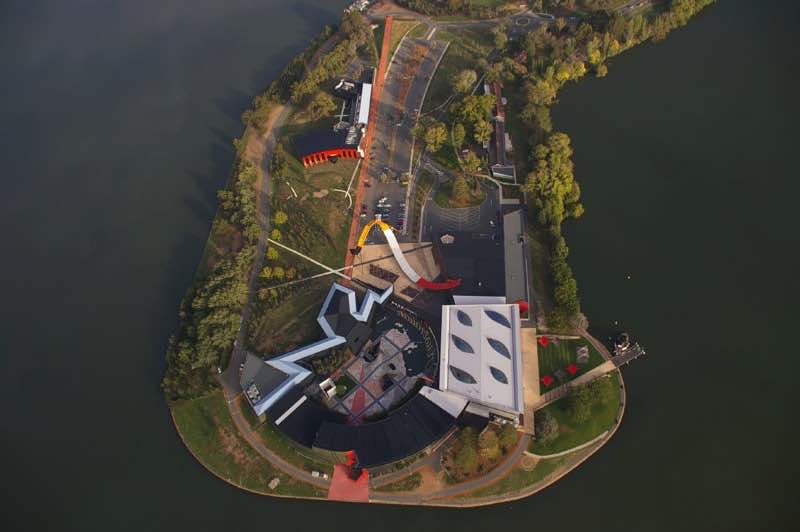
The National Museum of Australia was formally established by the National Museum of Australia Act 1980.
The National Museum preserves and interprets Australia's social history, exploring the key issues, people and events that have shaped the nation.
The Museum did not have a permanent home until 11 March 2001, when a purpose-built museum building was officially opened in the national capital Canberra.
The Museum profiles 50,000 years of Indigenous heritage, settlement since 1788 and key events including Federation and the Sydney 2000 Olympics. The Museum holds the world's largest collection of Aboriginal bark paintings and stone tools, the heart of champion racehorse Phar Lap and the Holden prototype No. 1 car.
The Museum also develops and travels exhibitions on subjects ranging from bushrangers to surf lifesaving. The National Museum of Australia Press publishes a wide range of books, catalogues and journals. The Museum's Research Centre takes a cross-disciplinary approach to history, ensuring the museum is a lively forum for ideas and debate about Australia's past, present and future.
Current Canberra Weather Forecast
Canberra