Click each point for more information on Sydney attractions
SYDNEY AIRPORT
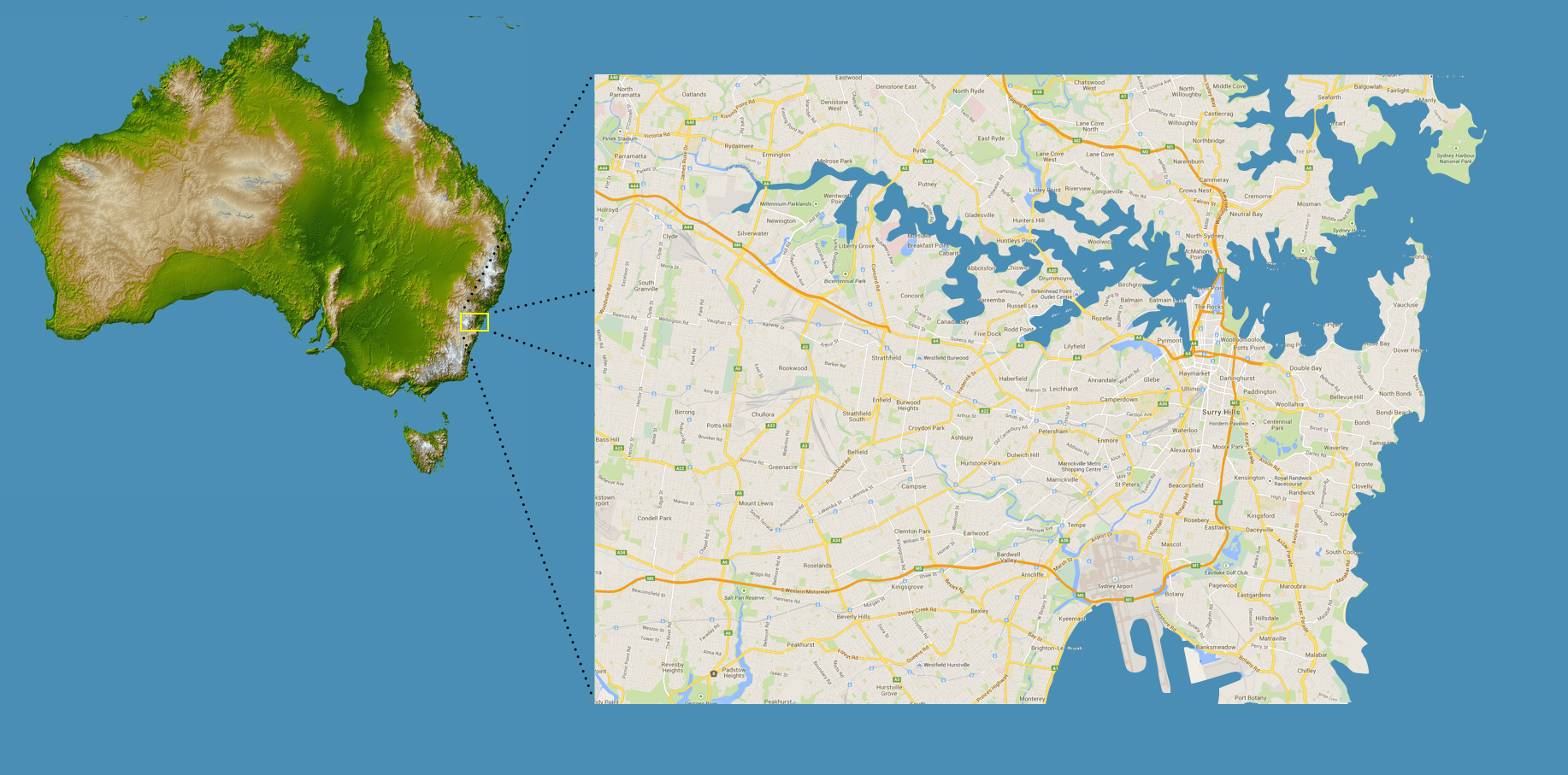
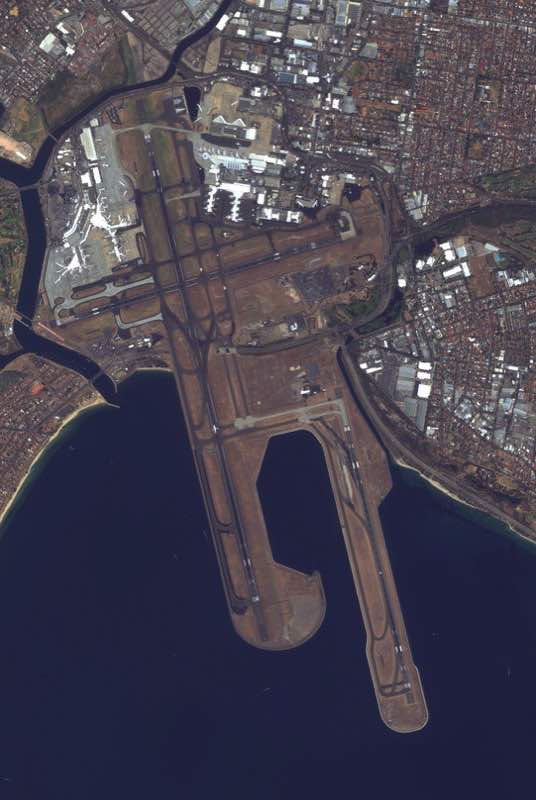
Sydney (Kingsford Smith) Airport (also known as Kingsford-Smith Airport and Sydney Airport) is an international airport located 8 km south of the city centre, in the suburb of Mascot in Sydney. It is the only major airport serving Sydney, and is a primary hub for Qantas, as well as a secondary hub for Virgin Australia and Jetstar Airways. Situated next to Botany Bay, the airport has three runways, colloquially known as the "east–west", "north–south" and "third" runways.
Sydney Airport is one of the oldest continuously operated airports in the world, and the busiest airport in Australia, handling 35,630,549 passengers in 2011 and 326,686 aircraft movements in 2013. It was the 31st busiest airport in the world in 2012. Currently 46 domestic and 43 international destinations are served to Sydney directly.
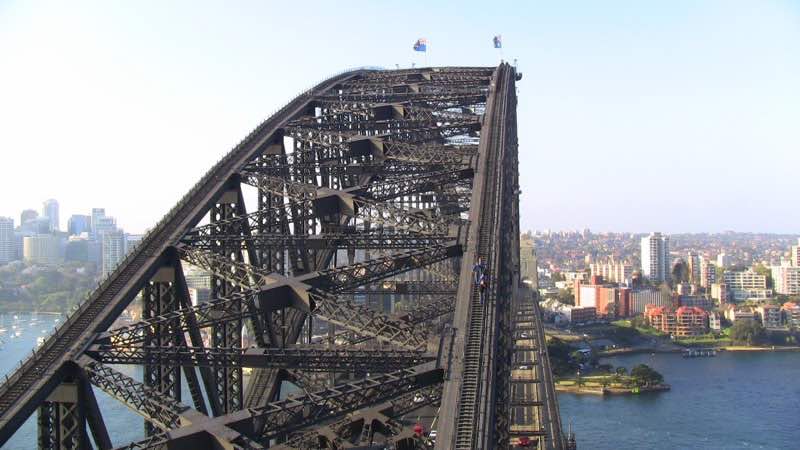
SYDNEY HARBOUR BRIDGE
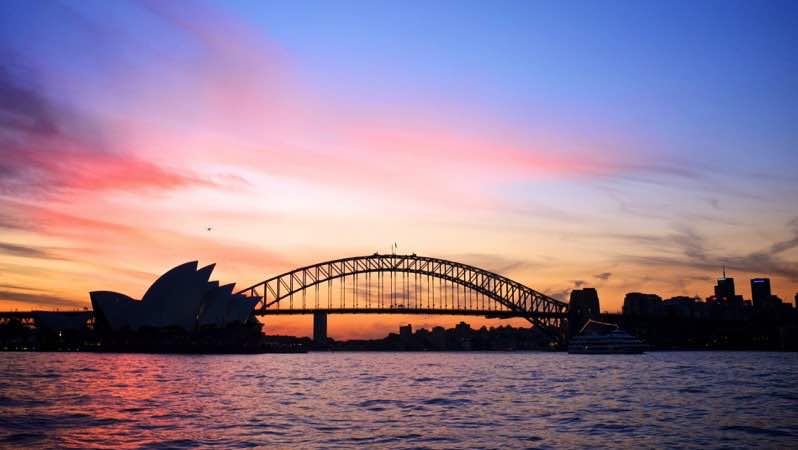
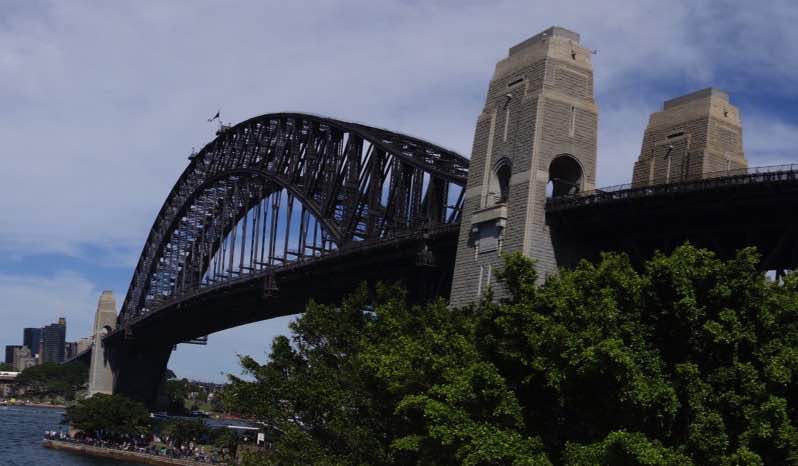
The Sydney Harbour Bridge is a steel through arch bridge across Sydney Harbour that carries rail, vehicular, bicycle, and pedestrian traffic between the Sydney central business district (CBD) and the North Shore. The dramatic view of the bridge, the harbour, and the nearby Sydney Opera House is an iconic image of Sydney, and Australia. The bridge is nicknamed "The Coathanger" because of its arch-based design. Furthermore, the bridge is ubiquitously known to Sydneysiders simply as "the Bridge".
Under the direction of Dr J.J.C. Bradfield of the NSW Department of Public Works, the bridge was designed and built by British firm Dorman Long and Co Ltd of Middlesbrough and opened in 1932. The bridge's design was influenced by the Hell Gate Bridge in New York City. It is the sixth longest spanning-arch bridge in the world and the tallest steel arch bridge, measuring 134 m (440 ft) from top to water level.
In 1950s and 1960s there were occasional newspaper reports of climbers who had made illegal arch traversals of the bridge, invariably by night. In 1973 Philippe Petit walked across a wire between the two pylons at the southern end of the Sydney Harbour Bridge. Since 1998, BridgeClimb has made it possible for tourists to legally climb the southern half of the bridge. Tours run throughout the day, from dawn to night, and are only cancelled for electrical storms or high wind.
Groups of climbers are provided with protective clothing appropriate to the prevailing weather conditions, and are given an orientation briefing before climbing. During the climb, attendees are secured to the bridge by a wire lifeline. Each climb begins on the eastern side of the bridge and ascends to the top. At the summit, the group crosses to the western side of the arch for the descent. Each climb takes three-and-a-half-hours, including the preparations.
In December 2006, BridgeClimb launched an alternative to climbing the upper arches of the bridge. The Discovery Climb allows climbers to ascend the lower chord of the bridge and view its internal structure. From the apex of the lower chord, climbers ascend a staircase to a platform at the summit.
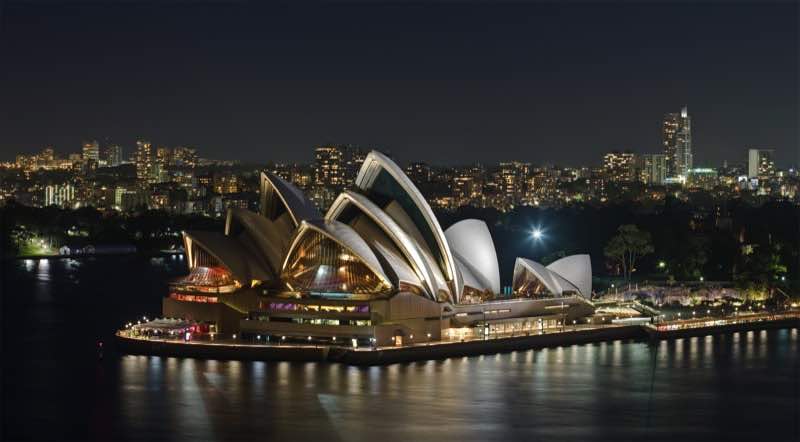
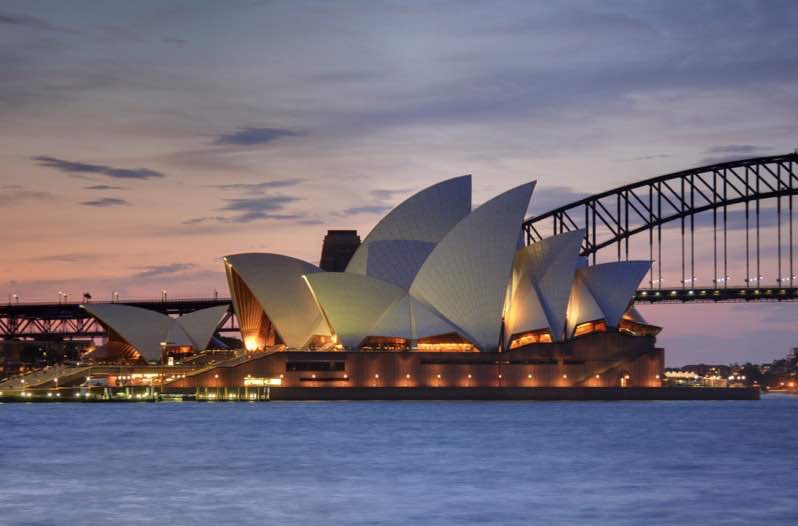
SYDNEY OPERA HOUSE
The Sydney Opera House is a multi-venue performing arts centre in Sydney, New South Wales, Australia. Situated on Bennelong Point in Sydney Harbour, close to the Sydney Harbour Bridge, the facility is adjacent to the Sydney central business district and the Royal Botanic Gardens, between Sydney and Farm Coves.
Designed by Danish architect Jørn Utzon, the facility formally opened on 20 October 1973 after a gestation beginning with Utzon's 1957 selection as winner of an international design competition. The Government of New South Wales, led by the premier, Joseph Cahill, authorised work to begin in 1958 with Utzon directing construction. The government's decision to build Utzon's design is often overshadowed by circumstances that followed, including cost and scheduling overruns as well as the architect's ultimate resignation.
Though its name suggests a single venue, the project comprises multiple performance venues which together are among the busiest performing arts centres in the world — hosting over 1,500 performances each year attended by some 1.2 million people. The venues produce and present a wide range of in-house productions and accommodate numerous performing arts companies, including four key resident companies: Opera Australia, The Australian Ballet, the Sydney Theatre Company and the Sydney Symphony Orchestra. As one of the most popular visitor attractions in Australia, more than seven million people visit the site each year, with 300,000 people participating annually in a guided tour of the facility.
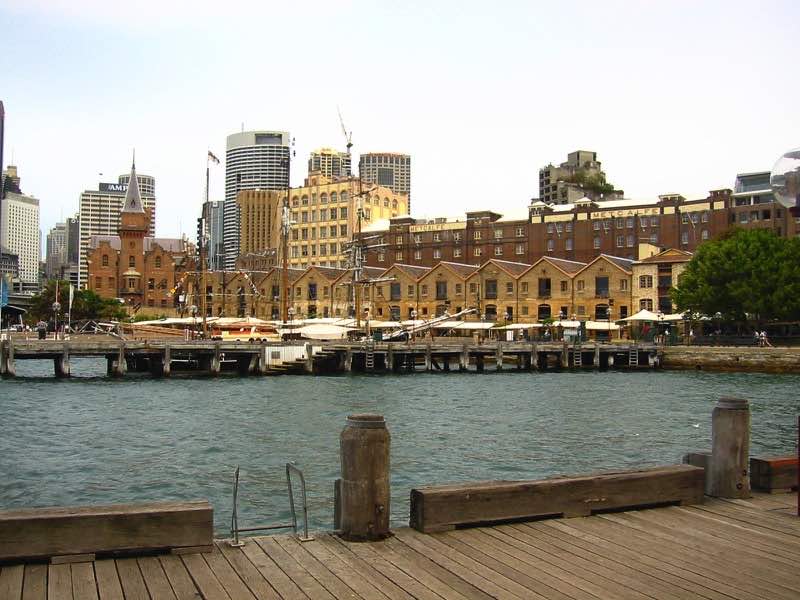
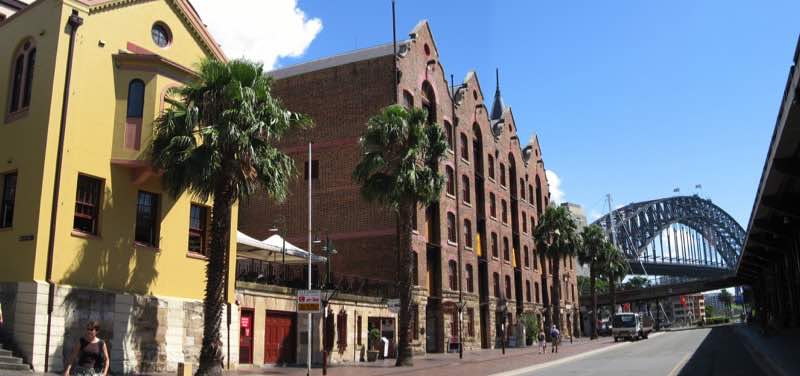
THE ROCKS
The Rocks is an urban locality, tourist precinct and historic area of Sydney's city centre, in the state of New South Wales, Australia. It is located on the southern shore of Sydney Harbour, immediately north-west of the Sydney central business district. The precinct and its immediate surroundings are administered independently of the local government area of the City of Sydney, by a New South Wales state government statutory authority, the Sydney Harbour Foreshore Authority.
The Rocks area borders on the Bradfield Highway, leading to the Sydney Harbour Bridge, with the localities of Dawes Point and Millers Point, to the west. It is immediately adjacent to Circular Quay on Sydney Cove, the site of Australia's first European settlement in 1788.
The close proximity to Circular Quay and the views of the iconic Harbour Bridge, as well as the historic nature of many of the buildings, makes the Rocks very popular with tourists. It features a variety of souvenir and craft shops, as well as many themed and historic pubs. The Rocks Market operates each weekend, with around 100 stalls. During the week, shopping options include galleries exhibiting Australian artists, such as Ken Done and Ken Duncan, as well as Australian clothing and Australian opal shops. There are numerous historic walks through the area, visiting historical buildings such as Cadmans Cottage and Sydney Observatory, and the Dawes Point Battery, which was the first fortified position in New South Wales.
Two separate pubs in The Rocks claim to be Sydney's oldest surviving pubs: the Fortune of War and the Lord Nelson. Others in the area include the Observer, the Orient, the Mercantile, the Palisade and the Hero of Waterloo.
A passenger boat terminal and the Museum of Contemporary Art, Sydney is also situated beside the Rocks area. The precinct can also be accessed by rail, as it is within walking distance of Circular Quay station.
CHINATOWN
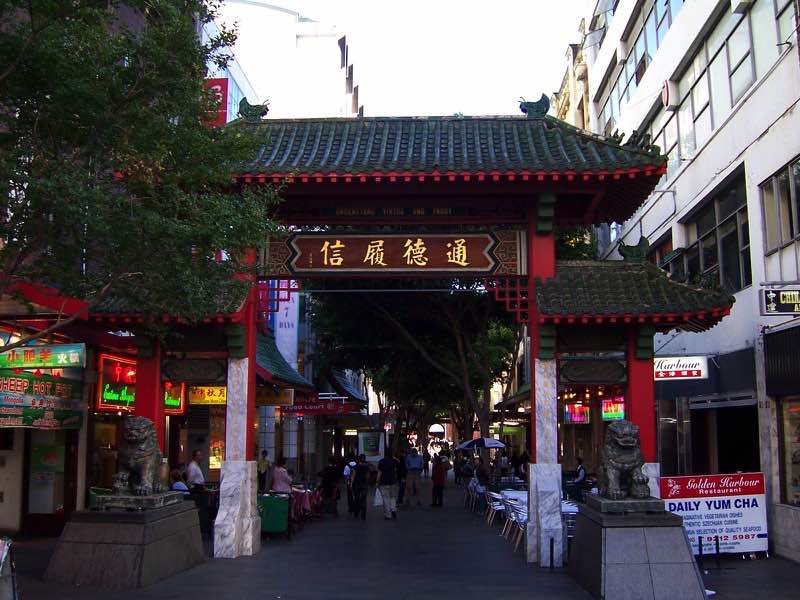
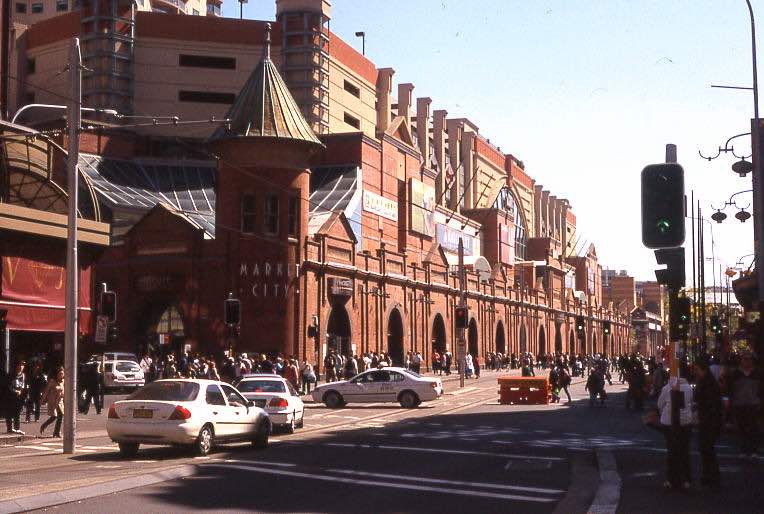
Sydney's Chinatown is an urban locality in the southern part of the Sydney central business district, in New South Wales, Australia. It is located in Haymarket, between Central Station and Darling Harbour.
Chinatown is centred on Dixon Street, a pedestrian street mall with many Chinese restaurants, and with a Paifang at each end. At the eastern side, running parallel with Dixon Street, are Sussex Street, which has a number of shops, and George Street, one of Sydney's main thoroughfares. At the eastern end of Chinatown, at the corner of George Street and Hay Street, there is a sculpture made from a dead tree trunk; created by artist Lin Li in 1999 and named Golden Water Mouth, it was said by its instigators to bring good fortune to the Chinese community. Other streets and lanes within Sydney's Chinatown include Factory Street, Goulburn Street, Little Hay Street, Kimber Lane and Thomas Street.
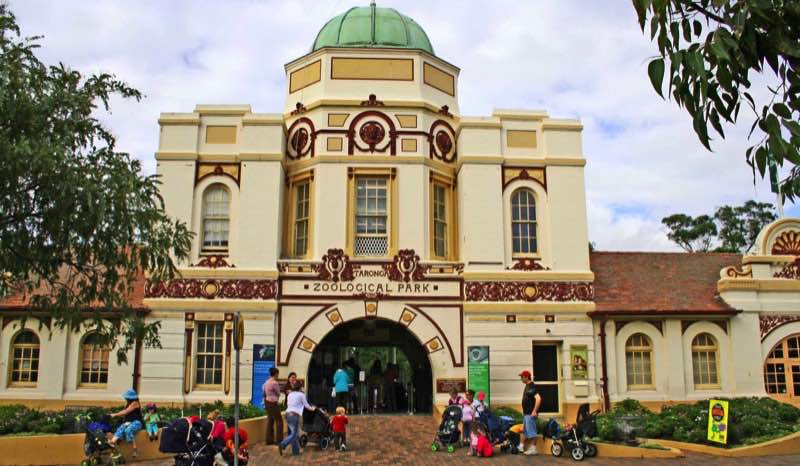
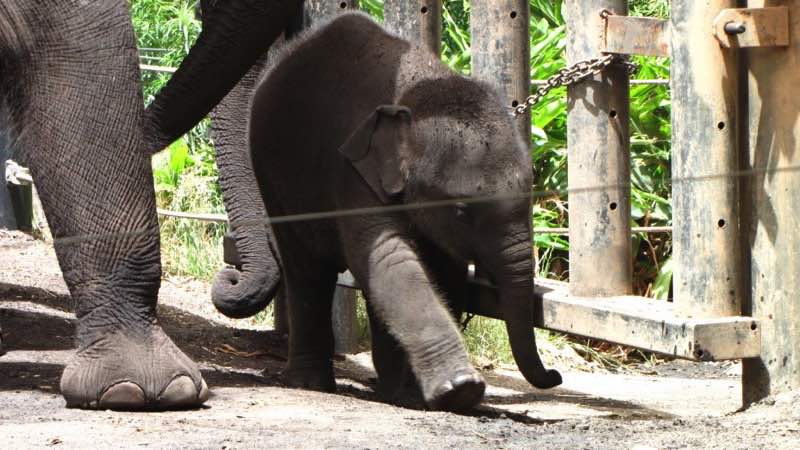
TARONGA ZOO
Taronga Zoo is the city zoo of Sydney, New South Wales, Australia and is located on the shores of Sydney Harbour in the suburb of Mosman. It was officially opened on 7 October 1916. Taronga Zoo is managed by the Zoological Parks Board of New South Wales, under the trading name Taronga Conservation Society, along with its sister Zoo Dubbo's Taronga Western Plains Zoo.
Divided into eight zoogeographic regions, the 21-hectare Taronga Zoo is home to over 4,000 animals of 340 species. It has a zoo shop, a cafe, and information centre.
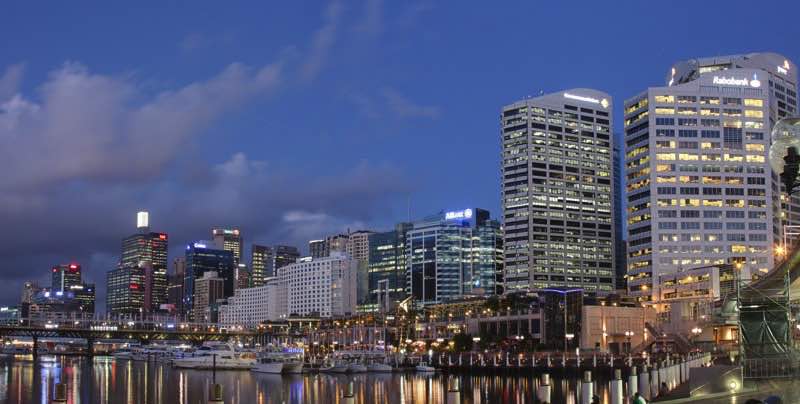
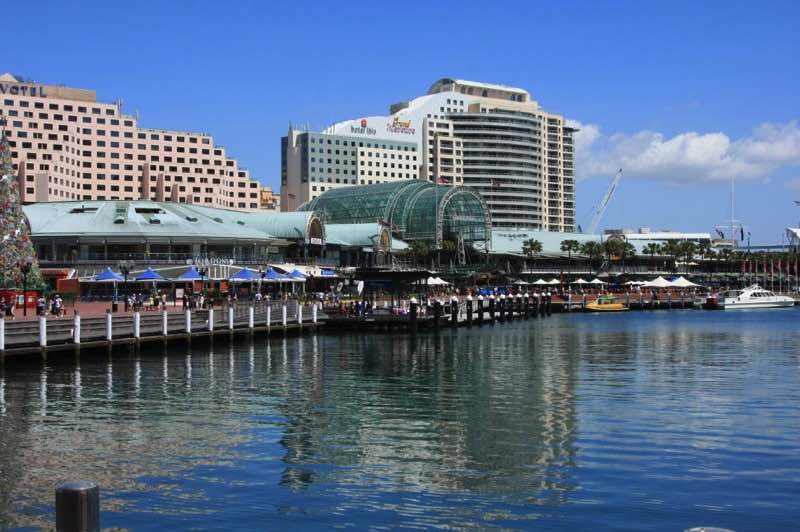
DARLING HARBOUR
Darling Harbour is a harbour adjacent to the city centre of Sydney, New South Wales, Australia. It is also a large recreational and pedestrian precinct that is situated on western outskirts of the Sydney central business district.
The Darling Harbour precinct is home to a number of major public facilities and attractions, including:
- Harbourside Shopping Centre which includes Kingpin Bowling Alley, M9 Laser Skirmish, as well as Australia's first retail Jet flight simulator
- Sydney Entertainment Centre
- Paddy's Markets
- Chinese Garden of Friendship
- Tumbalong Park
- Darling Quarter Playground
- Sydney Convention and Exhibition Centre
- Australian National Maritime Museum (featuring museum ships including HMAS Vampire)
- SS South Steyne
- The Star Casino and Entertainment Complex
- The Darling Hotel & Spa
- Powerhouse Museum
- Sydney Aquarium
- Madame Tussauds
- The LG IMAX theatre – the largest screen in the world
- Sydney Wildlife World
- Aboriginal Centre
- Channel Ten studios and news studio
- Pyrmont precinct
Current Sydney Weather Forecast
Sydney